
Lying down
Knees bent, lower back not arched, shoulders loose on the floor. This is the easiest position to feel a lift from the inside, and the one most people should start in.
start here
Educational guide only — pelvic floor training information for men in Indonesia, not medical advice.
+62 21 500 2767 · Mon–Fri, 9:00 AM – 6:00 PM WIB

Breathing and form
Most beginner problems come down to three things: the breath stops, the abdomen braces, or the surrounding muscles take over.
The five cues this page walks through: breath, lift, hand check, posture, rest.
A pelvic floor contraction is quiet work. Nothing should move on the outside, which is exactly why the errors are hard to spot from the mirror and easy to spot from the breath.
Most beginner problems with Kegel exercises come down to three things: the breath stops, the abdomen braces, or the surrounding muscles take over. This page goes through the cues that keep a set clean and the mistakes that show up most often, along with what each one usually means and what to adjust first.
You do not need equipment or a long session to test any of it. A hand on the lower abdomen and three slow breaths tell you most of what you need before a single repetition starts.
3s hold
A hold you can keep breathing through. Shorten it before you fight it.
3s rest
Rest at least as long as the hold so the next repetition is a clean one.
8 reps
A starter set. Fewer clean repetitions beat more tired ones.
If the breath stops the moment you squeeze, the abdomen is probably working harder than the pelvic floor.
Breathe normally through the contraction and the release. Harvard Health's guide advises keeping the abdomen, legs, and buttocks relaxed during the contraction, and steady breathing is the simplest way to check all three at once. Start a set only when your breathing is already settled — not while you are catching up from the stairs or talking through the first repetition.
Practically, that means a short pause before the first squeeze. Two or three normal breaths in and out, shoulders down, jaw loose, and only then the contraction. If you notice the breath snagging at the top of the squeeze, that is information, not failure: it usually means the effort is set a notch too high for today.
breath moving
The squeeze is inside your current capacity. Keep going.
breath stopped
Reduce the effort or the hold length, then rebuild from there.
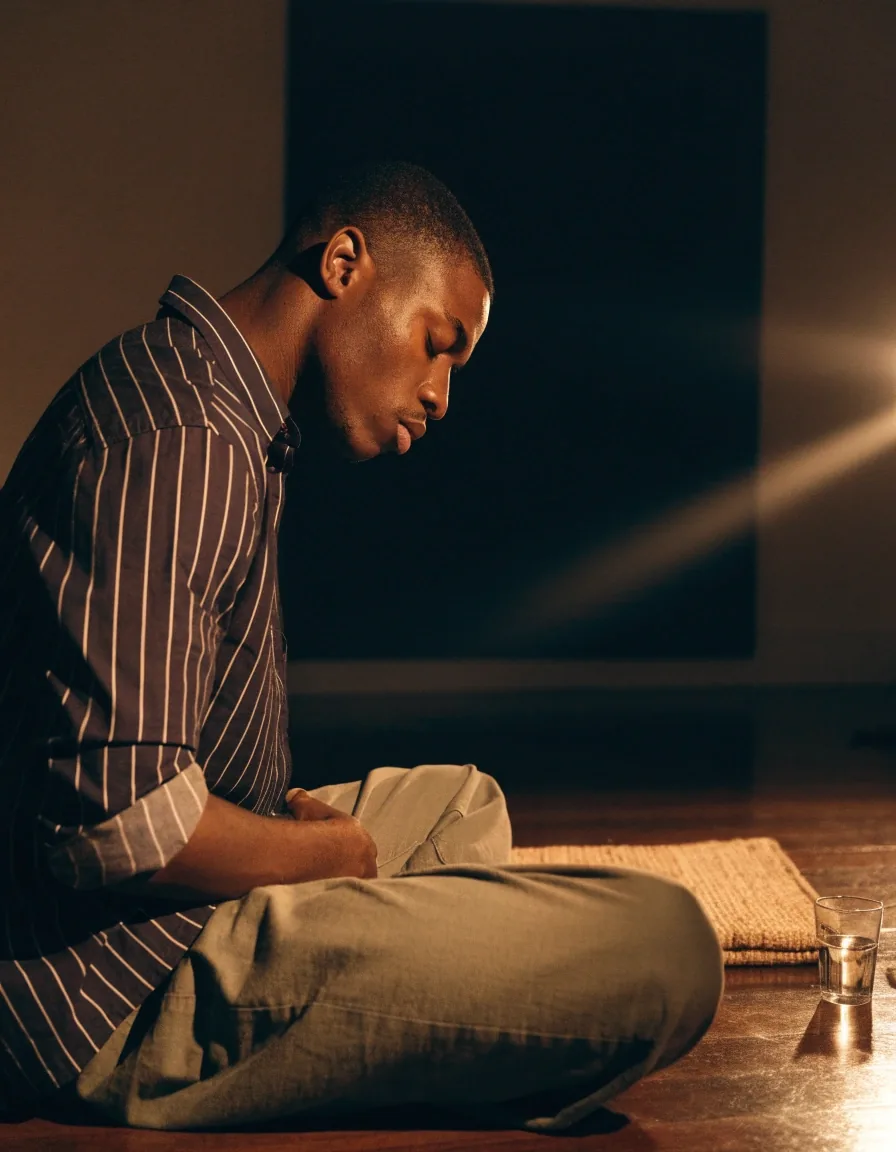
The hand check: a soft belly during the squeeze means the cue is working.
3 breaths
Put one hand on the lower abdomen for the first few sessions. If the hand rises or the belly hardens, you are bracing. The target sensation is a lift at the base of the pelvis, felt from the inside, with no visible movement from the outside.
Verywell Health's men's explainer notes that the testicles may rise slightly with a correct contraction, which some readers find a clearer signal than the internal feeling. Either signal works — what matters is that you are checking the same one each time so you can tell today's set from yesterday's.
The four form mistakes
Each of these shows up early, and each has a smaller correction than it looks like from the outside.
This is the most common substitution. It happens because the glutes and inner thighs are easier to feel than the pelvic floor, so the body recruits them by default. If your buttocks are clenching, stop the set, reset your position, and start again with a smaller squeeze. A weaker contraction in the right muscle is worth more than a strong one in the wrong place.
Breath-holding usually appears when the squeeze is too hard or the hold is too long. Both are easy to fix: reduce the effort until the breath keeps moving, then rebuild. If you cannot keep breathing through a five-second hold, use three seconds for another week before you try five again.
A downward push, sometimes felt as bearing down, is the opposite of what the exercise is for. It often comes with straining, as if the muscles are being forced. Verywell Health's beginner material frames the correct effort as a squeeze and lift. If you feel pressure rather than a lift, reduce the effort considerably and check your position before continuing.
The rest is where the muscle recovers enough to produce the next clean repetition. Cutting it short produces a set where the first repetition is the only good one. Use a rest at least as long as your hold, and a longer break between sets. If the muscle will not produce a clean contraction after a full rest, end the session there and pick it up tomorrow.
Check your setup before you start. Harvard Health's progression from lying to sitting to standing exists partly because each position changes how much postural work your body is doing at the same time — so a hold that feels clean lying down may feel different the moment you sit up.
Knees bent, lower back not arched, shoulders loose on the floor. This is the easiest position to feel a lift from the inside, and the one most people should start in.
start here
Feet flat, weight forward of the chair back, jaw unclenched. The chair carries some of the postural load, which makes this a useful middle step.
once lying is steady
Feet hip-width, weight even, knees soft. Standing asks the most of your posture at the same time, so keep the effort light and the breath visible.
last of the three
Run this before each set. The check takes less time to do than to read, and it catches the three problems above before they repeat across a whole set.
Take three slow breaths and confirm the belly is soft and the breath keeps moving without effort.
Squeeze once at low effort and check the thighs, buttocks, and breath. Nothing outside the pelvis should move.
If all three are clear, start the set. If not, adjust your position and try the check once more before you begin.

Some people run the check against a timer and stop watching the clock. Others count breaths. Either way, the check itself stays the same.
before every set
Short answers to the three things readers ask most often about breathing and form.
A weaker squeeze in the right muscle beats a strong one in the wrong place.
The line to remember when a set starts drifting.
Put a hand on the lower abdomen. If it hardens or rises during the squeeze, you are bracing. Reduce the effort until the belly stays soft, even if that means a contraction you can barely feel for a few sessions.
It is common but not desirable. Breath-holding usually means the squeeze is too strong or the hold too long. Shorten the hold until the breath continues on its own, then lengthen it again in small steps.
No. A correct contraction is felt internally as a lift, not seen as a movement of the abdomen or hips. Visible movement usually means other muscles are doing the work, and the fix is less effort rather than more.
That is usually fatigue rather than a form error. Take a longer rest, try one more repetition, and stop the session if the contraction is still unclear. A short set that ends cleanly is more useful than a long one that ends in substitution.
Once the breath and the hand check feel routine, the next useful step is choosing a position you can hold consistently and giving it a place in the week.
These pages are general practice information, not medical advice. If something hurts or feels wrong during a session, stop and speak with a qualified health professional. Questions about the material here can go to Contact, Monday to Friday, 9:00 AM – 6:00 PM (WIB).